
Vehicle Transportation & Safety Guide
A practical guide by Bharat Relocators to shipping two-wheelers and four-wheelers from Kolkata across India — covering document checklists, carrier safety, and delivery protocols.
Protecting Your Vehicle on Interstate Highway Journeys
This vehicle transportation guide by Bharat Relocators outlines the legal documentation, carrier safety measures, and handover procedures required for shipping cars and two-wheelers from Kolkata across India. Unlike standard household boxes, motorized vehicles require dedicated tie-down mechanisms, weight balance, and pre-transit condition recording to guarantee damage-free transit.
Whether relocating a commuter scooter or a family SUV, our vehicle coordinators manage enclosed container transport, terminal handling, and destination delivery with full transit insurance coverage.
For dedicated service specifications, explore our Car Transportation Services and Bike Transport Solutions.
Documents to Keep Ready Before Handover
Ensure you have photocopies of the following standard documents ready for highway compliance.
Vehicle Registration Certificate (RC)
Original or clear self-attested photocopy of the RC smart card/book verifying vehicle ownership and legal registration.
Valid Motor Insurance Policy
An active comprehensive or third-party vehicle insurance policy required during interstate transit.
Pollution Under Control (PUC) Certificate
Valid emission test certificate verifying vehicular compliance with national environmental standards.
Owner Government ID Proof
Photocopy of Aadhaar card, PAN card, voter ID, or passport matching the registered vehicle owner name.
Bank / Financier NOC (If Relocating Permanently)
If the vehicle is under active bank finance and you plan to permanently re-register in a new state, a bank NOC may be required by destination RTO authorities.
How to Prepare Your Vehicle for Shipping
Five essential preparatory steps before your carrier truck arrives.
1. Fuel Level Management
Keep the fuel tank to a minimal reserve level (approximately one-fourth or less). This minimizes fire hazards during highway container transit while leaving enough fuel for loading and unloading operations.
2. Thorough Cleaning & Wash
Wash your bike or car prior to handover so that existing minor scratches, paint chips, or stone dings are clearly visible during the pre-transit joint inspection.
3. Photographic Documentation
Take high-resolution photographs and a video walk-around of your vehicle from all angles in daylight, capturing the odometer, tires, body panels, and dashboard.
4. Remove Personal Belongings & Loose Accessories
Remove all personal items, documents, sunglasses, fastag tags (or disable auto-debit if desired), detachable mirrors, mobile phone holders, and external luggage racks.
5. Battery & Mechanical Readiness
Ensure tires have adequate pressure to facilitate smooth loading. Inform the coordinator if the vehicle has special starting instructions or custom low ground clearance.
Understanding Closed Carrier Vehicle Logistics
How enclosed container transport safeguards your motorized assets compared to open trailers.
Dedicated Enclosed Carriers
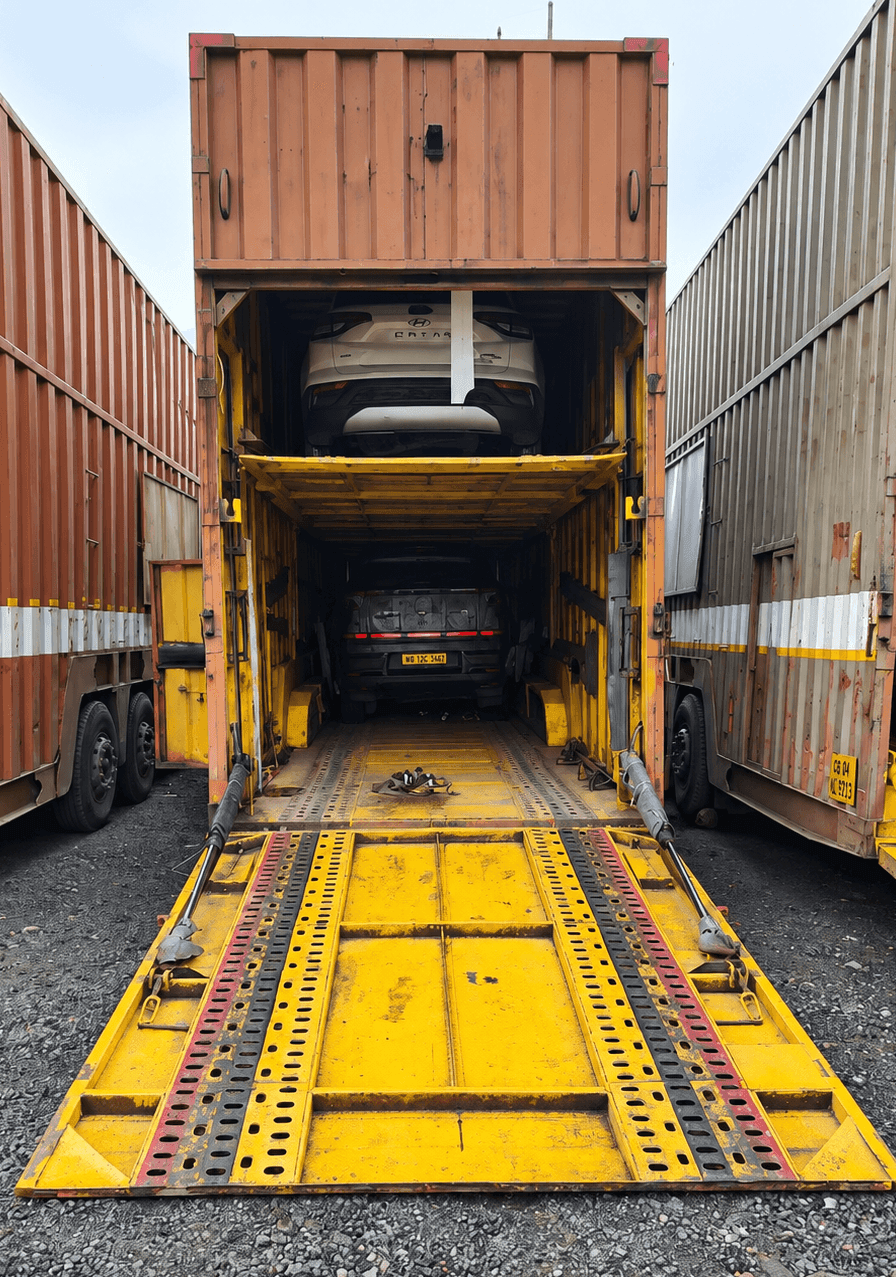
Enclosed car and bike containers shield vehicles inside a solid, weatherproof steel container body throughout the national highway network.
- ✓Enclosed Weather Protection: Shields vehicles against torrential rain, highway road spray, and direct sun UV exposure.
- ✓Debris Shield: Prevents paint chipping from loose highway stones and gravel kicked up by highway traffic.
- ✓Hydraulic Ramp Safety: Low incline angle prevents scraping low bumpers and side skirts.
Open Trailer Transport
Open multi-car trailers transport multiple vehicles exposed to open air. While common in factory bulk logistics, enclosed transport is preferred for individual relocations.
- •Subject to highway road grime, rain, and environmental dust.
- •Higher risk of surface scratches from airborne highway particles.
- •Requires external tarpaulin covers which may flutter against car paintwork.
Bike vs. Car Shifting Preparation
Key mechanical and packaging distinctions between two-wheeler and four-wheeler transport.
| Logistical Aspect | Bike Transportation | Car Transportation |
|---|---|---|
| Securing Mechanism | Heavy-duty nylon tie-down ratchet straps anchored to floor chocks; optional outer wooden crating. | Four-wheel locking chocks and heavy tension straps anchored directly to carrier chassis bed. |
| Packaging Layer | High-density bubble wrap, scratch-resistant foam sheets, and handlebar/exhaust heat wrap. | Full exterior container enclosure shielding against rain, highway dust, sunlight, and loose gravel. |
| Loading Method | Controlled manual ramp ascent into dedicated vehicle container bays. | Low-angle hydraulic tail ramps to safely board low ground-clearance sedans and SUVs without underbody scrapes. |
| Showroom / Home Pickup | Direct doorstep pickup via local transport or custom pickup crate. | Designated auto-carrier loading point or coordinator-assisted home pickup. |
Destination Handover & Condition Verification
Upon arrival at your destination city, our delivery coordinator conducts a joint condition inspection with you, cross-checking the vehicle against the signed pre-transit inspection sheet.